

Leave Your Message


The difference between lever hoist and chain hoist
Hoists are an indispensable tool in various industries such as construction, manufacturing and warehousing when it comes to lifting heavy objects. The most commonly used hoists are lever hoists and Chain Hoists. While the primary purpose of both is to lift and move heavy objects, they operate differently and are suitable for different applications. In this comprehensive blog post, we’ll explore the differences between lever hoists andchain hoists, their mechanisms, applications, advantages, disadvantages, and factors to consider when choosing between the two.
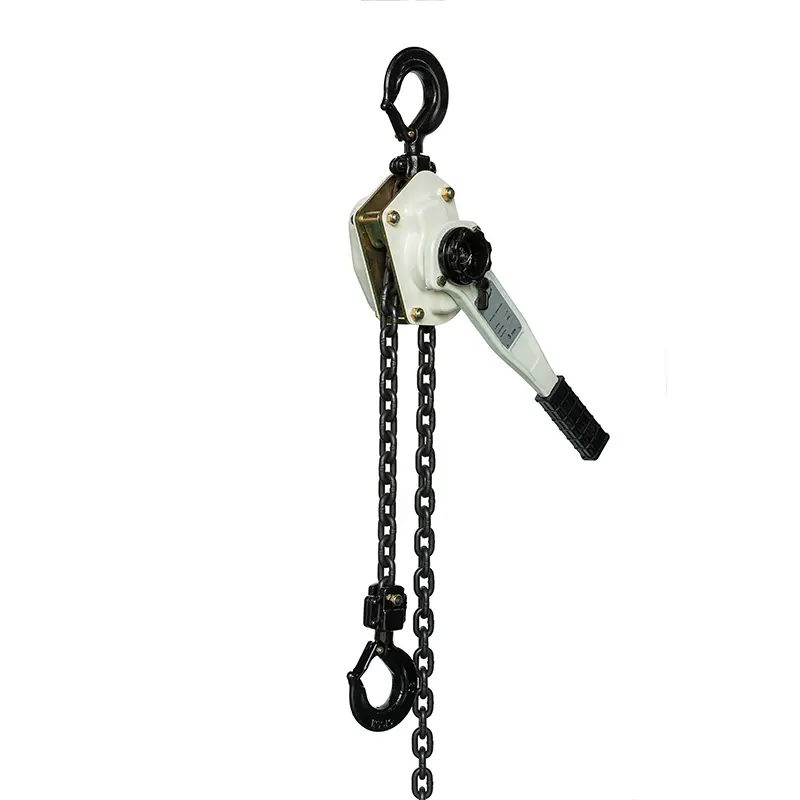
Table of contents
- Introduction
- **What is a lever hoist? **
- 2.1 Mechanism of lever hoist
- 2.2 Application of lever hoist
- 2.3 Advantages of Lever Hoist
- 2.4 Disadvantages of lever hoist
- **What is a chain hoist? **
- 3.1 Mechanism of chain hoist
- 3.2 Application of hand chain hoist
- 3.3 Advantages of hand chain hoists
- 3.4 Disadvantages of chain hoist
- Main Differences between Lever Hoists and Chain Hoists
- 4.1 Design and construction
- 4.2 Lifting mechanism
- 4.3 Load capacity
- 4.4 Portability and ease of use
- 4.5 Security features
- Choose a hoist that suits your needs
- 5.1 Assess your lifting requirements
- 5.2 Consider the environment
- 5.3 Budget considerations
- Conclusion
- FAQ
1. Introduction
Lifting equipment plays a vital role in various industries, allowing workers to lift and move heavy objects safely and efficiently. Among the many types of hoists, lever hoists and chain hoists are two of the most popular options. Understanding the differences between these two types of hoists is crucial to choosing the right tool for your specific lifting needs.
In this blog post, we’ll delve into the intricacies of lever hoists and chain hoists, examining their mechanisms, applications, advantages, and disadvantages. After reading this article, you will have a clear idea of which crane is best suited for your requirements.
2. What is a lever hoist?
Lever hoist, also known as lever hoist or ratchet hoist, is a manual lifting equipment that uses a lever and ratchet mechanism to lift heavy objects. Lever hoists are designed to lift, pull and position loads in a variety of applications, making them a versatile tool for the lifting industry.
2.1 Lever hoist mechanism
Lever hoists consist of several key components:
- Lever Arm: The long handle that the operator pulls down to lift the load.
- Ratchet Mechanism: When the pull rod is pulled down, it engages with the Load Chain, thereby lifting the load.
- LOAD CHAIN: The chain that connects the hoist to the load being lifted.
- Hook: The attachment point for a load, usually with a safety latch to prevent accidental disengagement.
To operate the lever hoist, the user pulls downward on the lever arm, which engages the ratchet mechanism. This action pulls the load chain upward, lifting the additional load. Release the lever to gradually lower the load.
2.2 Application of lever hoist
Lever hoists are commonly used in a variety of applications, including:
- Construction Site: Used for lifting heavy materials and equipment.
- Warehousing: Moving and placing goods on shelves.
- Auto Repair: Used for lifting engines and other heavy components.
- Marine Applications: Lifting boats and heavy equipment on docks.
2.3 Advantages of Lever Hoist
- VERSATILITY: Lever hoists can be used in a variety of applications, making them suitable for different industries.
- Hand-operated: They require no electricity or batteries, making them ideal for remote areas.
- Compact Design: Lever hoists are generally lightweight and portable, making them easy to transport and store.
- Precise Control: The lever mechanism can precisely control the lifting and lowering of the load.
2.4 Disadvantages of Lever Hoist
- LIMITED LOAD CAPACITY: Lever hoists generally have a lower load capacity compared to chain hoists.
- STRENGTH REQUIRED: Operating a lever hoist may require physical strength, especially with heavier loads.
- Not Suitable for Continuous Use: Lever hoists are best suited for occasional lifting tasks rather than continuous operation.
3. What is a chain hoist?
A chain hoist, also known as a hand hoist or chain hoist, is a lifting device that uses a chain and pulley system to lift heavy objects. Chain hoists can be manually or electrically operated, making them a versatile tool for a variety of lifting applications.
3.1 Mechanism of chain hoist
A chain hoist consists of several key components:
- Chain: The lifting chain that connects the hoist to the load.
- PULLEY SYSTEM: A series of pulleys help spread the load and reduce the force required to lift the load.
- Motor (for power chain hoist): The electric motor that drives the lifting mechanism.
- Hook: The attachment point for the load, usually with a safety latch.
To operate a manual chain hoist, the user pulls on the lifting chain, which engages a pulley system and lifts the load. In a powered chain hoist, the motor automatically raises and lowers the load at the push of a button.
3.2 Application of hand chain hoist
Chain hoists are used in a wide variety of applications including:
- Construction: Used for lifting heavy materials and equipment.
- Manufacturing: Moving and positioning heavy machinery and components.
- Warehouse: Used for lifting and stacking goods on high shelves.
- Theatre and Stage Production: Lifting and positioning lighting and stage equipment.
3.3 Advantages of hand chain hoist
- HIGH LOAD CAPACITY: Compared to lever hoists, chain hoists can lift significantly heavier loads.
- Less Physical Labor: Powered chain hoists require minimal physical effort to operate, making them suitable for continuous use.
- Multi-Function Operation: The chain hoist can be operated manually or electrically, providing flexibility for different applications.
- EFFICIENCY: The pulley system allows for efficient lifting, reducing the effort required to lift heavy objects.
3.4 Disadvantages of chain hoists
- Power supply dependency (for power models): Electric chain hoists require power supply, limiting their use in remote areas.
- Bulky Design: Chain hoists can be heavier and larger than lever hoists, making them less portable.
- Higher Cost: Powered chain hoists tend to be more expensive than manual lever hoists.
4. Main Differences between Lever Hoist and Chain Hoist
While both lever hoists and chain hoists are used to lift heavy objects, they differ in several key ways. Understanding these differences can help you choose the right hoist for your specific needs.
4.1 Design and Construction
- Lever Hoist: Typically a compact design with a lever arm and ratchet mechanism. It is lightweight, portable and easy to transport.
- Chain Hoist: Typically a more complex design with a chain and pulley system. Powered chain hoists are larger due to the motor and additional components.
4.2 Lifting mechanism
- Lever Hoist: Manually operated by pulling down on a lever arm which engages a ratchet mechanism to lift the load.
- Hand Chain Hoist: It can be operated manually by pulling the lifting chain, or it can be automatically lifted by electric motor drive.
4.3 Load Capacity
- Lever Hoist: Typically has a lower load capacity, making it suitable for lighter lifting tasks.
- Chain Hoist: Can lift heavier loads, ideal for industrial applications.
4.4 Portability and ease of use
- Lever Hoist: Light weight, easy to transport, suitable for various job sites.
- Chain Hoist: While manual chain hoists are portable, electric models may be larger and require a power source.
4.5 Security Features
- Lever Hoist: Usually includes a safety latch on the hook to prevent accidental disengagement.
- Chain Hoist: May include additional safety features such as overload protection and emergency stop button in powered models.
5. Choose the right hoist according to your needs
When choosing between a lever hoist and a chain hoist, there are several factors you should consider to ensure you choose the right tool for your specific lifting requirements.
5.1 Assess your lifting requirements
- Load Weight: Determine the maximum weight you need to lift. If the load exceeds the capacity of a lever hoist, a chain hoist may be required.
- Frequency of Use: Consider how often you use your hoist. For frequent lifting tasks, a powered chain hoist may be more effective.
5.2 Consider the environment
- Location: If you need to lift a load in a remote area without power, a manual lever hoist may be a better choice.
- Working Conditions: Assess the work environment. If you are working in a small space, a compact lever hoist may be more suitable.
5.3 Budget considerations
- Cost: Compare the cost of a lever hoist and a chain hoist. Manual lever hoists are generally cheaper, while powered chain hoists may require a larger investment.
6. Conclusion
In summary, both lever hoists and chain hoists are valuable tools for lifting heavy objects, and each has its own advantages and disadvantages. Lever hoists are ideal for lighter lifting tasks and situations where portability and manual operation are required. Chain hoists, on the other hand, are better suited for heavy-duty applications and continuous use, especially when powered options are available.
When choosing between a lever hoist and a chain hoist, consider your specific lifting requirements, work environment, and budget. By understanding the differences between these two types of cranes, you can make informed decisions that will enhance your lifting operations and keep your workplace safe.
7. Frequently Asked Questions
**Question 1: Can I use a lever hoist to carry heavy loads? **
A1: Lever hoists are designed for lighter loads and may not be suitable for very heavy lifting tasks. Always check load capacity before use.
**Question 2: Are hand chain hoists more expensive than lever hoists? **
A2: Generally speaking, power chain hoists are more expensive than manual lever hoists due to their complexity and higher load capacity.
**Question 3: Can I operate the chain hoist manually? **
A3: Yes, manual chain hoists can be operated by pulling the lifting chain, while electric chain hoists require electricity to operate.
**Question 4: What safety features should I look for in a hoist? **
A4: Look for safety latches, overload protection devices and emergency stop buttons on the hook in the electric hoist.
**Question 5: Which hoist is better for construction sites? **
A5: The choice depends on the specific lifting task. For lighter loads, a lever hoist may be sufficient, while heavier loads may require a chain hoist.
This blog post provides a detailed overview of the differences between lever hoists and chain hoists to help you make an informed decision for your lifting needs. Whether you choose the portability of a lever hoist or the heavy-duty capabilities of a chain hoist, understanding these tools will increase the efficiency and safety of your lifting operations.